- As with probably all collectibles,
'old' is good! The same is true with mathcovers, although, as
we'll see, the vast majority of 'old' covers aren't necessarily
treasures.
-
- First, what exactly is
'old' when it comes to matchcovers? Matchcovers go back to the
mid -1890's and, of course, have been produced ever since. That's
almost 130 years...longer than a person's lifetime. And that's
where where the first problem arises. The non-collector measures
time in relation to his own life. "I was a kid back in the
'70's...so a cover from the '70's must necessarily be old. It's
50 years old, after all." Not true from a collector's standpoint.
-
- The hobby defines 'old'
is anything Pre-War (before December 7th, 1941), so right away
that pushes 'old' back to at least 81 years. So now we're looking
at the period from say 1894-1941. And, since older is better,
I'd break the covers from that period into the following sub-categories:
-
- 1894-1919
- really old
-

|
- 1920-1930
- very old
-

|
- 1931-1941
- old
-
|
-
- 1894-1919: Practically speaking, matchcovers
from this period are so rare that it's hardly worth discussing.
There are some, but many collectors go through their entire collecting
careers without owning one. As far as I know, all the covers
within this time frame are from the Diamond Match Co., with the
exception of a couple from Binghampton Match Co. Diamond purchased
the rights to Joshua Pusey's first matchbook in 1892, and I'm
guessing that their patent rights extended through this period.
Hence, only Diamond produced any (legal) covers here. (There
are a few exceptions) Famous examples of such old covers include
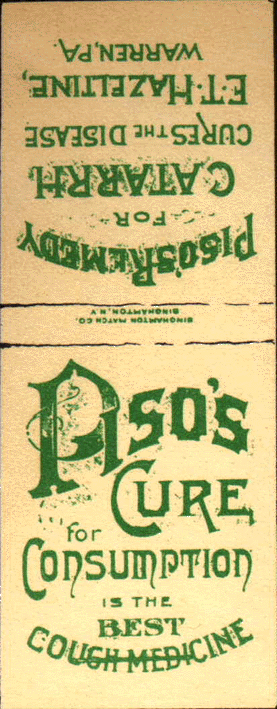
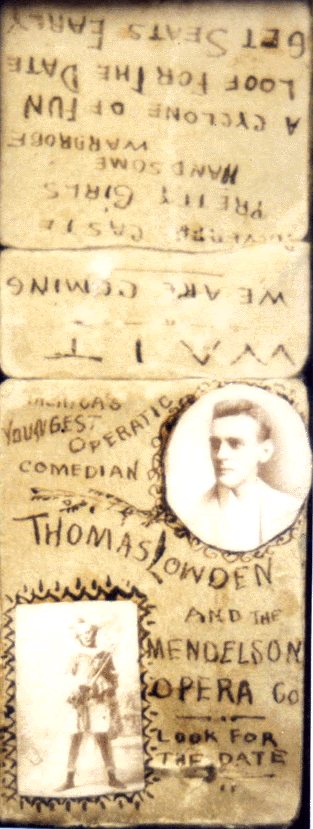
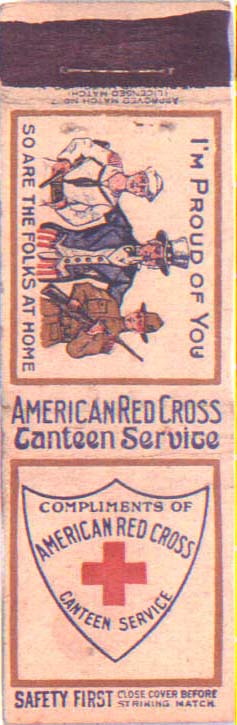
the Piso cover (c. 1895), the Mendelson Opera cover (1896), and the WW I Knights of Columbus/Red
Cross covers (1917-1918).
-
- 1920-1930: Even though there are more covers
known from this period, they're still relatively rare and just
about as difficult to locate and obtain. The most famous cover
from this period, and the most famous cover in the hobby, is
the Lindbergh cover (1927)
-
- 1931-1941: Now, we're talking! Here's where
the great bulk of the Oldies covers come from. They're not the
oldest; they're not necessarily the rarest; but these, for the
most part, are what collectors refer to when talking about 'oldies'.
-
- And here comes the second
problem for non-collectors - Even if what you're looking at is
a certified oldie, it's probably a run-of-the-mill cover. "What?!
But it's an oldie!" I know; I know...but the truth of the
matter is...most oldies are run-of-the-mill, nothing special
covers, except that they're 80+ years old, and if you just want
to collect 'old' covers, fine, but other than that they're not
particularly sought after; other than age and in particular categories,
they're not unique.
-
- That's not to say they're
not wanted. If a Coca-Cola collector, or a Tobacco collector,
for example, happened to find an 80 year-old cover in his or
her specialty, it would be a very nice find, indeed. And, there
are certainly collectors who simply collect old covers. But for
the most part, such a cover from a shoe store, or restaurant,
or whatever, has nothing going for it other than age. The older
covers that are coveted (those that might be called 'golden
oldies') are those that have age plus something else...usually
added rarity stemming from a rarer manumark or footer...or size.
The advent of vending machines in the 1930's necessitated that
matchbook covers be somewhat shorter. Ergo, those older covers
(referred to as 'Talls'
or 'XL's') that are
noticeably longer than later issues have an extra appeal to collectors.
By the same token, the size of the striker has a similar allure.
About the same time that the length of the cover changed, so
did the size of the striker. Referred to as 'wide-strikers', these earlier issues featured noticeably larger
strikers (vertically). Also, the striker on earlier issues may
be askew due to hand application. While not
directly making the cover any more desirable, such a striker
does indicate greater age.
-
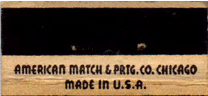
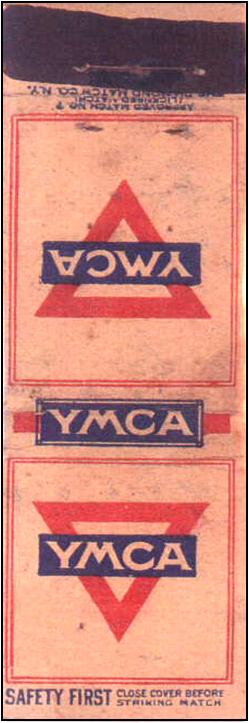
- Here are some of the golden
oldies manumarks:
-
-
-
-
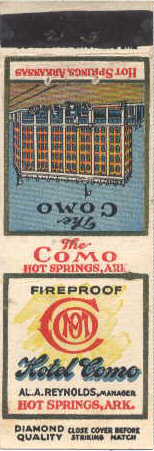
- Here are some of the golden
oldie footers:
-
-
-
- Older covers sometimes
need special care and handling. In some cases, the striker may
have become either soft or brittle. One can normally spot this
problem because the striker area on the inside of the
cover is discolored. In such a case, a strip of clear tape over
the inside area will help give support. On the earlier covers,
early Diamond covers especially, the striker material was brushed
on on top of the staple. Thus, if the striker has become
at all brittle, there's a very good chance that the cover will
be ruined if one tries to remove the staple. In such cases, I
recommend simply leaving it as a full-book. Finally, older covers
were made of thicker stock, as and a result will take longer
to press flat.
|